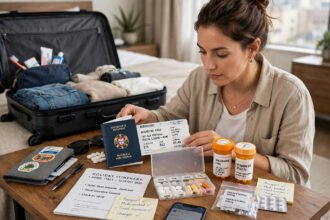
Travel insurance and health belong together, because the most important thing insurance does on a trip is protect your health. A cancelled flight is an inconvenience, and a lost bag is annoying, but a serious illness or injury far from home can affect your health, your plans, and your finances all at once. Yet many travellers think about health and insurance as two separate jobs: one is about packing medication and feeling fit, and the other is about buying a policy. In practice, they are one job. The health preparation you do before departure shapes the cover you need, the cover you buy shapes the care you can get abroad, and the care you receive abroad shapes how you recover when you return home. This guide follows that whole journey, from the health check before you travel to the follow-up after you are home, so that your health and your insurance work together rather than in isolation.
It is worth saying at the outset that this article is general information about travel, insurance, and staying well, not medical advice for any individual. Health decisions, including whether you are fit to travel, how to manage a condition abroad, and what medication to take, should be made with your own doctor or pharmacist, who knows your history. What this guide can do is explain how health and insurance connect, what to think about at each stage of a trip, and which questions to ask your doctor and your insurer before you leave. For the general background on how holiday cover works, our guide to holiday insurance in the UK is a useful companion, while this article focuses on the health side of the picture: your body, your care, and your cover, from departure to return.
The starting point is a simple shift in thinking. Instead of asking only whether you have insurance, ask whether your health is prepared for this particular trip. A long-haul flight, a hot climate, a high-altitude destination, a physically demanding itinerary, and a relaxing beach break place very different demands on the body. A traveller in good general health still needs to think about sleep, hydration, sun, food, and the strain of travel itself, while a traveller with a health condition needs to think about those things plus the specific needs of their condition. Insurance then becomes the safety net underneath that preparation: it does not replace looking after your health, but it makes sure that if your health needs professional care abroad, you can get it without facing an unmanageable bill.
A Health Check Before You Travel
A health check before travel does not need to be formal or frightening. For most travellers, it means a honest look at how you are feeling, a check that routine health matters are up to date, and a conversation with your doctor if anything has changed recently. If you have a health condition, if you take regular medication, if you have recently changed treatment, if you are recovering from illness or surgery, or if you are unsure whether a destination suits you, a conversation with your doctor well before departure is wise. Your doctor can advise on fitness to travel, on managing your condition in a different climate or time zone, on vaccinations or preventive health measures for your destination, and on what to do if your condition flares up while you are away. Raising these questions early matters, because some health arrangements, such as documentation for medication or advice about a particular destination, take time to sort out.
This pre-travel check is also the right time to think about the practical health details of your destination. How hot will it be, and how will heat affect you. How high is the destination, and does altitude matter for your health. How long is the flight, and do you need to think about movement, hydration, and rest during travel. What health services are available where you are going, and how far are they from where you will stay. None of these questions should put you off travelling, and for most people the answers are reassuring. Their value is that they turn a vague worry into a clear plan: what to pack, how to pace the trip, when to rest, and where to go for help if you need it. A trip planned around your health is usually a more enjoyable trip, not a more restricted one.

Health Declarations: Your Health Record, Not Just a Form
Health declarations on a travel insurance application can feel like paperwork, but it helps to think of them as your health record for the trip. When you declare a health condition, you are telling the insurer what it needs to know in order to offer cover that actually includes you. A declaration made fully and honestly means that if you need care related to that condition abroad, the claim will be judged against cover that was agreed with full knowledge, rather than against a policy that never included the condition. That is why accuracy matters so much: not only declaring each relevant condition, but answering follow-up questions about treatment, stability, and recent changes as carefully as you can, with your medication list and recent health history to hand if that helps.
It also helps to think about declarations as part of your health preparation, not as a hurdle separate from it. Going through the questions often prompts useful reflection: has anything changed since your last trip, have you started or stopped any medication, have you had any new symptoms or referrals that you should mention to your doctor as well as your insurer. If your health changes after you buy a policy but before you travel, tell your insurer promptly, just as you would tell your doctor about a change that matters. A change disclosed before departure can usually be accommodated, sometimes with revised terms, while a change that first comes to light during a claim abroad is far harder to resolve. Keeping your insurer informed is simply keeping your health record up to date.
One point deserves emphasis because it protects both your health and your cover: get the outcome of any health declaration in writing before you travel, and check that it names your conditions correctly. Written confirmation is what a hospital or an insurer will rely on if you need care abroad, and it removes any doubt about what was agreed. Keep a copy with your policy documents, take a copy on the trip, and leave a copy with someone at home. If the written terms differ from what you understood, query the difference before departure, when there is still time to change provider or clarify the position. This small piece of administration is one of the most valuable health preparations you can make.
Medical Cover in Health Terms
Medical cover is often described in insurance language, but it is easier to understand in health terms: it is the promise that if you become ill or injured abroad, you can get treatment, and if you become seriously ill, you can get home safely. The most important parts of that promise are emergency treatment where you are, transport to a suitable hospital if the nearest facility cannot treat you, and medical transport back to the UK if that is the safest course. Check that your policy includes all three, not just treatment in a local clinic, because getting home safely can be one of the largest and most important parts of care after a serious illness abroad. Also check whether the insurer pays hospitals directly or reimburses you afterwards, since direct payment can remove a great deal of stress at a difficult time.
It is also worth understanding what medical cover does not do, so that your health preparation fills the gaps. Insurance does not replace the routine health care you need every day, such as taking regular medication, managing a condition, or following your doctor’s advice. It does not cover treatment for a condition that was not declared, and it does not cover care for problems that arise from travelling against medical advice or against official travel advice for a destination. Knowing these boundaries before you travel helps you plan honestly: you take responsibility for the daily management of your health, and insurance takes responsibility for the unexpected care you could not have managed alone. That division is what makes the combination work.
A UK Global Health Insurance Card, known as a GHIC, fits into this picture as a useful extra, not as a replacement for insurance. It gives access to state-provided healthcare in the EU and some other countries on the same terms as local residents, which can help with routine or emergency state care in those places. It does not cover private treatment, medical transport back to the UK, or the other protections of a travel policy, and it does not apply everywhere. Carry it if you have one, but do not rely on it alone for your health abroad. Your travel policy remains the document that ensures you can get the care you need, wherever you are, and get home if you need to.
Staying Well Day to Day Abroad
Much of staying well abroad comes down to simple daily habits that are easy to overlook in the excitement of a trip. Drink enough water, especially in hot climates and after flights, and eat regularly rather than skipping meals and then eating a large meal late. Protect yourself from the sun with shade, clothing, and sunscreen, and give yourself time to adjust to heat, altitude, or a new time zone rather than packing the first day full. Sleep matters more on holiday than many travellers realise, because tiredness lowers your resilience, makes you more vulnerable to minor illness, and makes accidents more likely. A trip that includes rest is not a wasted trip; it is a trip your body can actually enjoy.
Food and water safety also deserve attention, and the advice depends on your destination. In some places, tap water is safe to drink, while in others bottled water is the wiser choice, and local guidance for your destination will tell you which applies. Eating food that is freshly cooked and served hot, choosing busy places where food turns over quickly, and being cautious with food that has been sitting out are sensible habits anywhere. If you have a food allergy or a dietary requirement, carry a clear explanation in the local language if possible, and do not be embarrassed about asking what is in a dish. Looking after your health in these small daily ways reduces the chance that you will need your insurance at all, which is the best outcome for everyone.
Mental health is part of staying well abroad too, and it deserves the same attention as physical health. Travel can be stressful, even when it is enjoyable: unfamiliar places, disrupted sleep, time-zone changes, and being away from home routines can all affect mood and anxiety. Keeping some familiar routines, such as regular sleep, regular meals, and time to rest, helps more than many people expect. If you take medication for a mental health condition, keep taking it as prescribed, carry enough for the trip plus a little extra, and keep it in your hand luggage. If you feel unwell emotionally while away, do not dismiss it as just holiday stress; seek support from a travelling companion, from your accommodation, or from a local health service if needed, just as you would for a physical problem.

Pacing a Trip for Your Health
Pacing is one of the most underrated health preparations, because it costs nothing and changes everything. A trip that races from sight to sight, with early starts, late nights, long transfers, and no rest days, will exhaust even a healthy traveller and can be genuinely hard for someone with a health condition. Building rest into the itinerary, choosing accommodation in a comfortable and convenient location, and leaving some days deliberately light gives your body time to recover and enjoy the trip. It also means that if you have a day when you feel unwell, you can rest without feeling that the whole trip has been ruined, because the plan has room for it.
Choosing a suitable base is part of pacing. Accommodation close to the places you want to visit, with easy transport, nearby shops and pharmacies, and a comfortable room for rest, will support your health far better than a distant or uncomfortable stay that demands long journeys every day. This is true for short breaks as well as long holidays. Our guide to cheap city breaks shows how a well-paced short break, built around a walkable city and an unhurried itinerary, can feel richer than a rushed one, and that unhurried approach is also the healthier approach. A trip that leaves you refreshed is a trip that has been paced well, not a trip that has been packed full.
Physical activity on a trip should also be paced to your health. Walking, swimming, cycling, and exploring are wonderful parts of travel, but they should match what your body can comfortably do, especially in heat or at altitude. Build up activity gradually over the first days, take breaks, drink water, and stop if you feel unwell rather than pushing through. If you plan a particularly active trip, such as a walking holiday or a trip involving watersports, discuss it with your doctor beforehand, and check that your insurance covers the activities you plan. Activity that is enjoyable and well paced supports your health; activity that exhausts you undermines it, however impressive it looks in photographs.
Travelling with Medication and Health Equipment
Travelling with medication or health equipment needs a little extra planning, but it is straightforward once the basics are covered. Keep medication in your hand luggage, not in checked baggage, so it stays with you even if a bag is delayed. Carry enough for the whole trip, plus a little extra in case of delays, and keep it in its original packaging with the pharmacy label visible. A letter from your doctor explaining your condition and medication can help with security checks and customs, and can help medical staff abroad understand your treatment quickly if you need care. A copy of your prescription is also useful, both for replacing medication if it is lost and for explaining your treatment to a pharmacist or doctor abroad.
Before departure, check the rules for your destination and your airline. Some medications that are routine in the UK are controlled or restricted elsewhere, and some countries require documentation or prior permission. Your doctor or pharmacist can advise, and official travel health guidance for your destination is worth checking well before departure, since permissions can take time to arrange. Also check your airline’s rules for carrying medication and medical equipment, including any limits on liquids, needles, or powered devices, and tell the airline in advance if you need special assistance or extra hand luggage for medical reasons. If you use equipment that needs power or charging, check how you will charge it during travel and at your destination, and carry any adapters or spare supplies you need.
It is also sensible to think about what happens if medication is lost, damaged, or runs out. Knowing the generic name of your medication, not just the brand name, helps a pharmacist abroad identify it, since brand names vary between countries. Knowing where the nearest pharmacy is to your accommodation, and carrying your doctor’s letter and prescription copy separately from the medication itself, means that even if one bag is lost, you still have the information needed to replace it. These small preparations take little time before departure and can save a great deal of worry during the trip.
If You Fall Ill or Are Injured Abroad
If you fall ill or are injured abroad, the first step is to get the care you need, and the second step is to contact your insurer. In a genuine emergency, seek help immediately and do not delay treatment to make a phone call. Once the immediate situation is stable, or as soon as you reasonably can, call your insurer’s emergency helpline. The helpline can confirm that your treatment is covered, arrange direct payment to a hospital where possible, advise on the nearest suitable facility, and arrange medical transport if needed. Calling early matters, because insurers can question costs they were not given the chance to approve, and because the helpline can often make practical arrangements that are difficult to organise alone in an unfamiliar place.
Keep a record of everything from the moment you seek care. Keep receipts for treatment, medication, and transport, keep copies of medical reports and prescriptions, and note the names of doctors, hospitals, and clinics involved. Keep a note of every call to your insurer, including the date, the name of the person you spoke to, and what was agreed. If you are travelling with a companion, ask them to help keep these records, since it can be difficult to manage paperwork while unwell. These records are not bureaucracy for its own sake; they are the evidence that supports a claim, and they help medical staff who treat you later understand what has already been done.
If your illness or injury means you cannot continue the trip as planned, your insurer can advise on the next steps, including whether you should return home early, whether treatment should continue where you are, and what costs are covered. Do not arrange expensive transport home yourself without speaking to the insurer first, unless it is a genuine emergency where delay would be dangerous. The insurer’s medical team can judge the safest course, and can arrange transport that is appropriate to your condition. If you are travelling alone and become seriously unwell, tell someone at home as soon as you can, and make sure they know where you are, which hospital you are in, and how to contact your insurer. A trusted person at home who holds copies of your policy and health documents can be an invaluable help at such a time.

Looking After Your Health When You Return Home
Looking after your health does not end when you land back home. Give yourself time to recover from travel, especially after a long flight or a trip involving a large time-zone change, and do not rush straight back into a full schedule if you can avoid it. If you fell ill abroad, follow up with your doctor after your return, even if you feel better, and share any medical reports or treatment details from abroad so that your ongoing care is properly informed. If you started, changed, or stopped any medication during the trip, discuss that with your doctor as well, so that your regular treatment is correctly resumed or adjusted.
It is also worth completing any insurance claim promptly after you return, while the details are fresh and the documents are to hand. Gather your receipts, medical reports, and call records, and submit them with a clear account of what happened. If a claim is refused, ask for the refusal in writing and check it against your policy wording and your health declaration record. Genuine misunderstandings do happen, and a polite, evidence-backed challenge sometimes succeeds. If the refusal stands and you believe it is wrong, you can complain through the insurer’s formal complaints process, and then to the Financial Ombudsman Service if the complaint is not resolved. Knowing this route exists is reassuring, but the best protection remains the preparation you did before departure.
Finally, use what you learned on the trip to prepare better for the next one. Did the pace suit you, or did you need more rest. Did the destination suit your health, or would a different climate or a shorter journey suit you better. Did your medication and documents work well, or did you discover a gap to fix. Did your insurance feel straightforward when you needed it, or did you discover something to check next time. Each trip teaches you something about travelling well with your health, and carrying those lessons forward means that the next trip starts from a stronger position. Travel and health, well managed together, make every future journey easier and more enjoyable.
Frequently Asked Questions
Should I see my doctor before every trip?
Not necessarily for every short, routine trip if you are in good health and nothing has changed. A conversation with your doctor is wise if you have a health condition, take regular medication, have recently changed treatment, are recovering from illness, or are unsure whether a destination suits you. When in doubt, a short conversation well before departure is always worthwhile.
Does travel insurance replace looking after my health abroad?
No. Insurance provides care and financial protection when something goes wrong, but daily health management, such as taking medication, staying hydrated, pacing yourself, and following your doctor’s advice, remains your responsibility. The two work together: good daily care reduces the chance of needing a claim, and good cover ensures care is available when you do need it.
What should I do first if I fall ill abroad?
In an emergency, seek medical help immediately without delay. Once the immediate situation is stable, contact your insurer’s emergency helpline as soon as you reasonably can, so that treatment and any transport can be confirmed and arranged. Keep every receipt, medical report, and record of calls, since these support any later claim.
Is a GHIC enough on its own for health cover abroad?
No. A GHIC gives access to state-provided healthcare in the EU and some other countries on the same terms as local residents, but it does not cover private treatment, medical transport back to the UK, or the other protections of a travel policy. Treat it as a useful extra alongside proper travel insurance, not as a replacement for it.
What if my health changes after I buy insurance but before I travel?
Tell your insurer promptly, just as you would tell your doctor about a change that matters. A change disclosed before departure can usually be accommodated, sometimes with revised terms, while a change that first comes to light during a claim is far harder to resolve. Ask for the revised position in writing before you travel.
Conclusion
Travel insurance and health are not two separate preparations but one continuous journey: a health check before you leave, honest health declarations that become your health record for the trip, medical cover understood in terms of the care it provides, daily habits that keep you well abroad, a well-paced itinerary that respects your body, medication and documents prepared with care, and a clear plan for getting help if you fall ill and for following up when you return home. Manage those stages together, with advice from your doctor and clear written terms from your insurer, and you travel with something more valuable than a policy alone: the confidence that your health is prepared for, protected, and cared for, wherever your journey takes you.