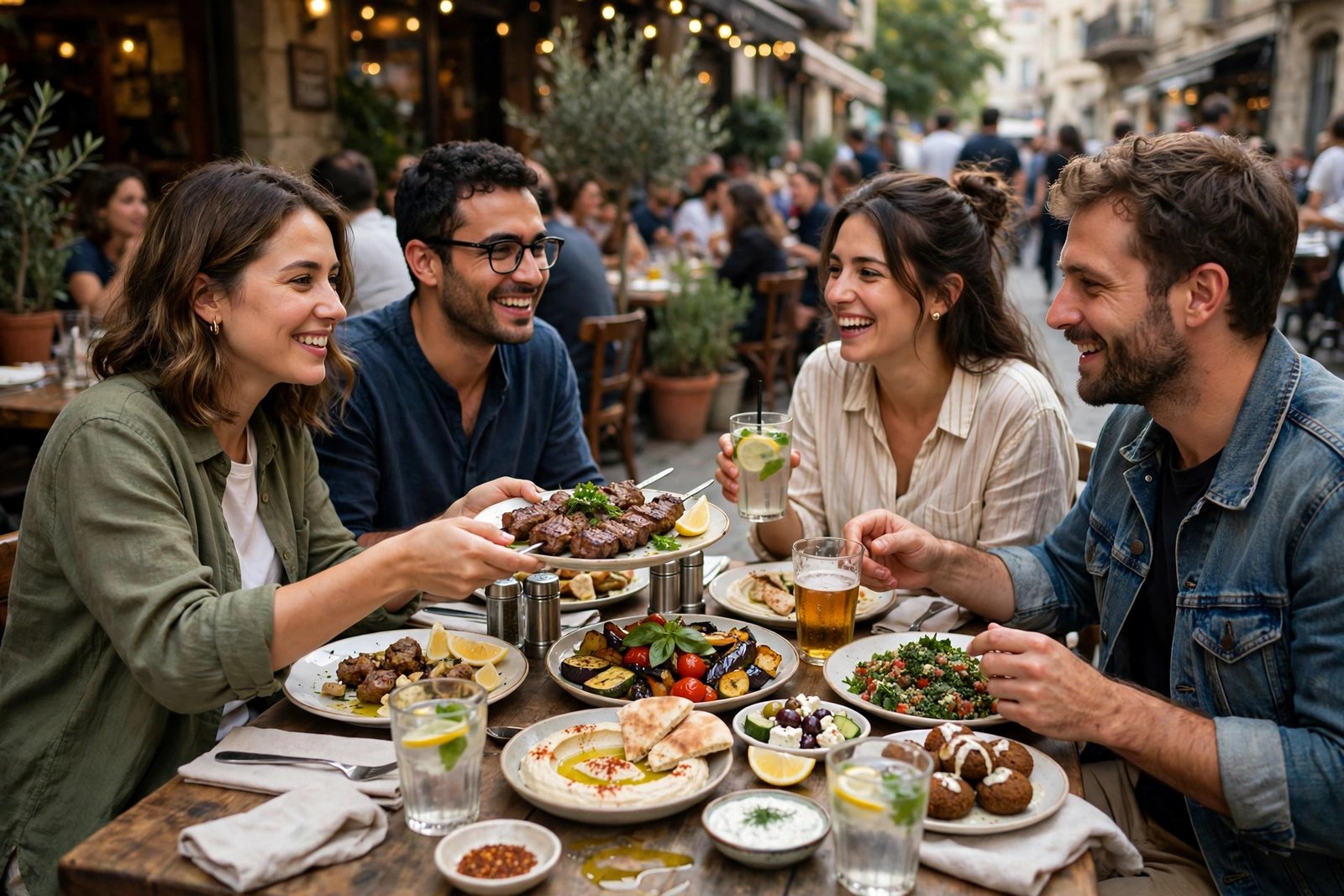
Type “best places to eat near me” into your phone and you will get a long list in seconds, but a long list is not the same as a good meal. Some of the places at the top are there because they pay to be seen, some because they are close rather than good, and some because they suit a completely different kind of meal from the one you want. Finding the best places to eat near you is less about trusting the first result and more about knowing what to look for: the signs of a kitchen that cooks with care, the clues in a menu, the reviews worth believing, and the local habits that lead you to food you will actually enjoy. This guide shows how to do that, whether you are at home, on a day out, or visiting somewhere new.
It helps to start by deciding what kind of meal you want, because “best” changes with the occasion. A quick lunch between errands, a relaxed dinner with friends, a family meal with children, a date, or a celebration all call for different places. A restaurant that is perfect for a quiet conversation may be a poor choice for a lively group, and a brilliant street food stall may not suit a formal occasion. Before you search, settle the basics in your mind: how much time you have, who you are eating with, whether you need somewhere quiet or somewhere lively, and whether anyone in the group has dietary needs or accessibility needs. A short pause to answer those questions will save you from scrolling through dozens of places that were never right for you in the first place.
Location matters too, but not in the way search results suggest. The nearest restaurant is not always the best one, and a short walk can make a real difference. Places on a main square or a busy shopping street often pay high rents and cater to passing trade, which can mean higher prices and less care in the kitchen. A restaurant a few streets back, on a side street or in a residential neighbourhood, often survives on repeat local customers, which is a much better sign. If you have time, walk a little further and look for the places where local people are eating, rather than the places with the biggest signs or the most prominent position. The same thinking applies when you are away from home, and it is one of the reasons our guide to cheap city breaks recommends eating where locals eat: a city break feels far more rewarding when the food comes from neighbourhood kitchens rather than tourist-facing restaurants.
How to Search Well
A good search starts with being specific. Instead of only searching for the best places to eat near you, add the kind of food or the occasion: a search for a good neighbourhood Italian restaurant, a relaxed brunch spot, or a family-friendly place with vegetarian options will return far more useful results than a general search. Maps and review apps are useful tools, but use them as a starting point rather than a final verdict. Open the places that catch your eye, read a handful of reviews rather than just the star rating, and look at recent photos taken by customers rather than only the polished pictures supplied by the restaurant. Customer photos show the real portions, the real room, and the real atmosphere, which are often very different from professional marketing images.
It is also worth checking more than one source. A restaurant can look excellent on one app and ordinary on another, because different apps attract different reviewers. If a place is consistently praised across several sources, that is a strong sign. If the praise appears on only one platform and reads in a suspiciously similar style, treat it with caution. Local recommendations are often the best source of all. Ask people who live nearby, ask staff at your hotel if you are travelling, or look for local food blogs and community groups that discuss where they actually eat. A recommendation from someone who eats in the area regularly is worth far more than a ranking compiled from a distance.
How to Read Reviews Without Being Misled
Reviews are helpful, but only if you read them properly. Star ratings alone tell you very little, because they average together very different experiences: a diner who loved the food but waited too long, a diner who had a perfect evening, and a diner who was unhappy about something unrelated to the food. Read the words, not just the stars, and look for patterns across many reviews rather than reacting to a single glowing or angry comment. If many reviewers mention the same dish, the same friendly member of staff, or the same problem with slow service, that pattern is probably real. If one review contradicts all the others, it may reflect a single bad evening rather than the usual standard.
Pay attention to when reviews were written. A restaurant can change hands, change chefs, or change its menu, and reviews from a long time ago may describe a place that no longer exists. Recent reviews, from the last few months, give a much better picture of what you will find today. Also look for reviews that describe specifics: the freshness of the ingredients, the care in the cooking, the portion sizes, the noise level, the attitude of the staff. Vague praise such as “amazing” or vague criticism such as “terrible” tells you little, while a review that explains what was ordered, how it tasted, and how the evening felt tells you a great deal. Reviews written by people who clearly eat out often, and who mention both strengths and weaknesses, are usually the most trustworthy.

What to Look for in a Menu
A menu tells you a great deal about a restaurant before you sit down. A short, focused menu usually means the kitchen cooks a smaller number of dishes well, uses fresh ingredients, and changes dishes with the seasons. A very long menu, covering many different cuisines, can be a warning sign, because it is difficult for any kitchen to cook dozens of unrelated dishes to a high standard, and long menus often rely on frozen or pre-prepared ingredients. That is not always the case, and some large restaurants manage a broad menu well, but as a general guide, a menu that knows what it is tends to deliver better food than a menu that tries to be everything.
Look for signs of freshness and honesty in the wording. Menus that name local suppliers, describe how dishes are cooked, or note which dishes change with the season suggest a kitchen that cares about its ingredients. Be wary of menus where every dish is described in exaggerated language but nothing is specific, or where photographs of every dish are used to sell rather than to inform. Also check how the menu handles dietary needs. A good restaurant will mark vegetarian, vegan, and gluten-free options clearly, and staff should be able to answer questions about allergens confidently. If a menu is vague about ingredients or staff seem unsure, that is worth noting, especially if anyone in your group has an allergy or a dietary requirement.
Signs of a Good Restaurant When You Arrive
Once you arrive, a few simple observations will tell you whether you have chosen well. A restaurant that is busy with local customers at normal meal times is usually a good sign, because locals return only to places they trust. A restaurant that is empty at the busiest time of the week, while neighbouring places are full, is worth questioning. Notice the small details: whether tables are clean and well kept, whether staff greet you warmly and seem to enjoy their work, whether the room smells of fresh cooking rather than stale oil or cleaning products. None of these details alone proves anything, but together they paint a picture of a place that is cared for.
The way staff handle your arrival also matters. Good service is attentive without being intrusive, and staff should be happy to explain dishes, suggest options, and answer questions about ingredients. If you feel rushed, ignored, or pressured to order quickly, that tells you something about how the restaurant treats its customers. Similarly, a restaurant that is honest about a wait for a freshly cooked dish is usually preferable to one that promises everything instantly. Fresh cooking takes time, and a short wait for food cooked to order is often a sign of quality rather than a problem. Trust your instincts on arrival: if a place feels welcoming, clean, and cared for, the food is more likely to match.
Local Food, Street Food and Markets
Some of the best places to eat near you may not be restaurants at all. Local markets, food halls, bakeries, delis, and street food stalls often serve food that is fresher, more distinctive, and more closely tied to the area than a standard restaurant meal. A market stall run by one person who cooks a single dish every day can produce food of remarkable quality, because the cook has perfected that dish through repetition. Food halls let a group choose different things while still eating together, which solves the common problem of a group that cannot agree on one cuisine. Bakeries and delis are excellent for a light lunch, especially when they bake on the premises or source from local producers.
Street food deserves a little extra care, but not fear. Look for stalls with a queue of local customers, a clean preparation area, and food cooked to order in front of you. A long queue is a good sign, provided the stall is handling it well and food is not sitting around for a long time. Ask about ingredients if you are unsure, and choose stalls where you can see the cooking happening. In many towns and cities, street food markets and regular farmers markets have become a central part of local food culture, and exploring them is one of the most enjoyable ways to discover what an area does best. They also offer a chance to talk to producers and cooks directly, which often leads to recommendations for other local places worth trying.

Eating Out for Different Occasions
Choosing well means matching the place to the occasion. For a quick lunch, look for places that serve fresh food promptly, with a short menu and a relaxed attitude to timing. A bakery, a deli, or a small cafe with a daily changing lunch menu often suits this better than a formal restaurant. For a family meal, look for a place with space between tables, a menu that offers something for children without treating them as an afterthought, and staff who are genuinely welcoming to families rather than merely tolerant. A noisy, lively room can be a blessing with children, because a little noise of your own will go unnoticed.
For a meal with friends, the best places are often those that encourage sharing: restaurants with dishes designed to be passed around the table, food halls where everyone can choose, or lively neighbourhood places where the atmosphere does the work. For a date or a celebration, atmosphere matters as much as food. Look for a room that feels special without being stiff, lighting that flatters rather than glares, and a pace that lets you linger rather than rushing you through courses. Our guide to a romantic weekend in Amsterdam shows how a city break built around neighbourhood restaurants and unhurried meals can feel far more celebratory than a formal setting chosen for its reputation alone. The lesson applies at home too: the best celebration meal is one where you can hear each other, enjoy the food, and stay as long as you like.
For eating alone, which many people enjoy far more than they admit, choose a place where solo diners are clearly welcome: a counter seat, a small table by the window, a cafe with good coffee and a book-friendly atmosphere. A restaurant that treats a solo diner with the same warmth as a large party is a restaurant that understands hospitality. For a working lunch or a business meal, look for reliable service, a quiet enough room for conversation, and a menu that does not demand a long decision. In each case, the right place is the one that fits the occasion, not the one with the highest rating in general.

Dietary Needs, Allergies and Accessibility
A genuinely good restaurant is one that welcomes everyone at the table, including people with dietary needs, allergies, or accessibility requirements. Before you book, check whether the menu marks dietary options clearly and whether the restaurant invites you to mention allergies when booking. When you arrive, staff should be able to answer questions about ingredients without guessing, and should be willing to check with the kitchen if they are unsure. A restaurant that treats an allergy question as an inconvenience is telling you something important, while a restaurant that takes it seriously and offers safe alternatives is showing care that usually extends to the rest of its cooking.
Accessibility matters just as much. Step-free access, an accessible toilet, tables with room for a wheelchair, and a room that is not so loud that conversation becomes difficult are all part of what makes a place good to eat in. These details are often mentioned in reviews, and it is worth checking them before you go if they matter to your group. Similarly, if you are eating with someone who has a hearing difficulty or a visual difficulty, a quieter room with good lighting and a clear menu will make the meal far more enjoyable. The best places to eat near you are the ones where everyone in your group can relax, not just the people whose needs happen to match the room.
How to Avoid Common Disappointments
A few common mistakes lead to most disappointing meals out. The first is choosing by photograph alone, whether a glossy picture on a review site or a dish photographed for social media. Food that photographs well does not always taste well, and a restaurant that invests heavily in presentation for photographs may invest less in flavour. The second mistake is ignoring the time of day: a restaurant that is excellent for dinner may serve a tired lunch menu, and a brunch spot may be disappointing in the evening. Check reviews for the meal you actually plan to eat, not just the restaurant in general.
Another common mistake is booking the most famous place without checking whether it suits you. Fame brings crowds, queues, and often a menu designed to please everyone, which can mean it pleases no one in particular. A smaller, less famous place nearby may cook with more care and offer a more personal experience. Finally, do not be afraid to change your mind. If you arrive and the place feels wrong, if the menu does not offer what you hoped, or if the atmosphere is not right for your occasion, it is perfectly reasonable to leave and try somewhere else. A short walk to a better place is far preferable to a long meal in the wrong one.
Frequently Asked Questions
How do I find the best places to eat near me when I am visiting somewhere new?
Start with a specific search for the kind of food or occasion you want, read recent reviews for patterns rather than star ratings, and ask local people for recommendations. Walk a few streets away from the main tourist areas and look for places busy with local customers, since those places survive on repeat visits rather than passing trade.
Should I trust the top result on a search or maps app?
Not on its own. Top results can reflect advertising, proximity, or popularity rather than quality, and they may not suit your occasion. Use them as a starting list, then check reviews, menus, and recent customer photos before deciding.
Is a short menu always better than a long menu?
Not always, but it is a useful guide. A short menu often means fresher ingredients and dishes cooked with care, while a very long menu covering many cuisines can be harder to cook well. Judge the menu alongside reviews and the overall feel of the place, rather than on length alone.
What if no one in my group can agree on where to eat?
Food halls and markets are an excellent solution, since everyone can choose something different while eating together. Alternatively, choose a neighbourhood restaurant with a varied but focused menu, and agree the occasion first: a relaxed shared meal suits most groups better than a formal restaurant chosen for one person’s taste.
How do I know if a restaurant handles allergies well?
Check whether the menu marks allergens and dietary options clearly, mention the allergy when booking, and ask staff about ingredients on arrival. Staff who answer confidently, or who check with the kitchen without hesitation, are a good sign. If answers feel vague or dismissive, consider choosing somewhere else.
Conclusion
The best places to eat near you are rarely found by trusting a single list or a single rating. They are found by knowing what kind of meal you want, searching specifically, reading reviews for patterns, checking menus for freshness and honesty, and noticing the small signs of care when you arrive. Walk a little further than the nearest option, eat where local people eat, try markets and street food alongside restaurants, and match the place to the occasion rather than to a ranking. Do that, and the search for somewhere good to eat becomes part of the pleasure, not a chore before it. The next great meal is usually closer than the search results suggest, in a neighbourhood kitchen that has been quietly cooking well for years.