
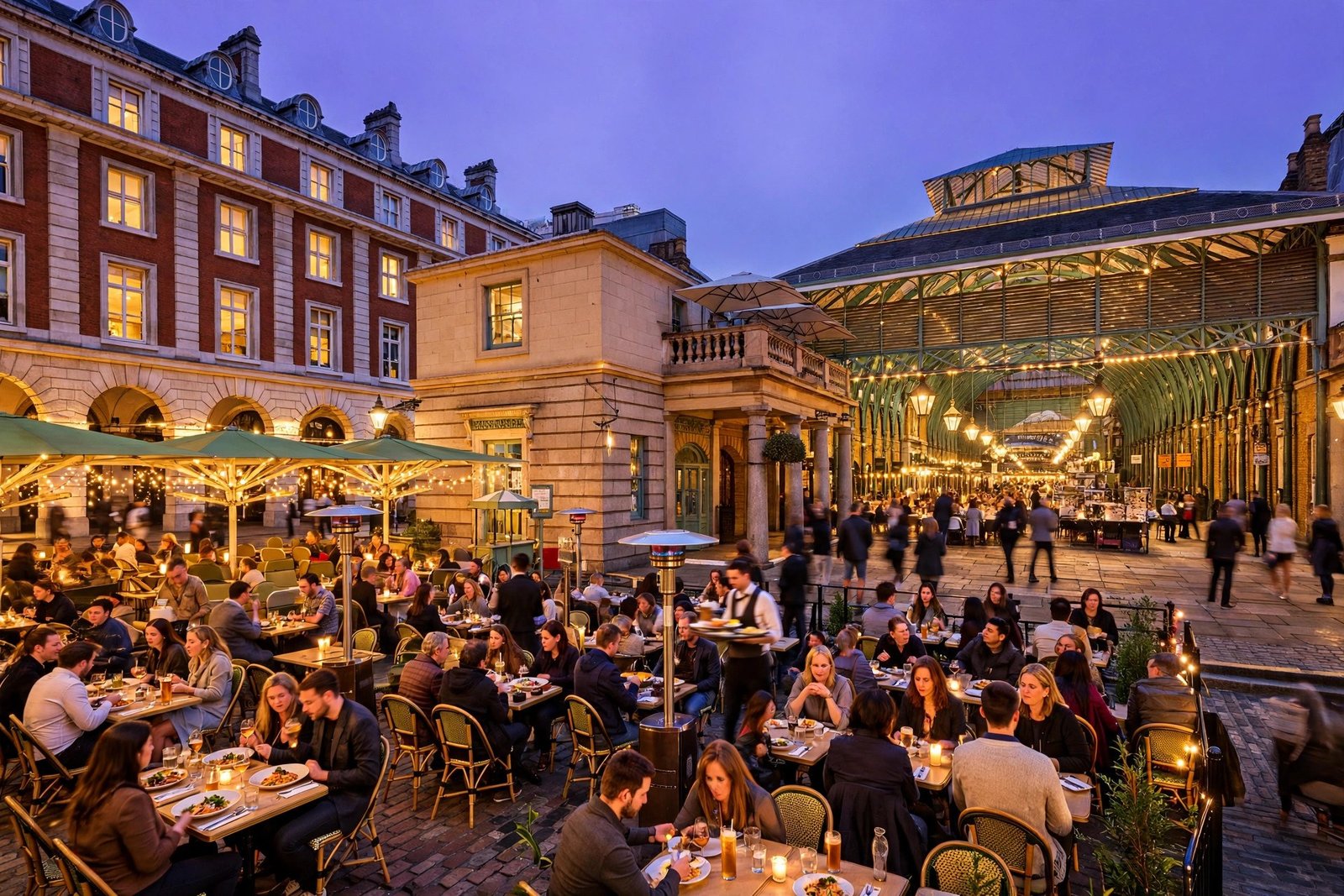
Covent Garden is one of those rare London neighbourhoods where eating out feels like part of the entertainment rather than a pause between sights. The old market halls, the cobbled piazza, the street performers and the theatres all feed into the same lively atmosphere, and the restaurants in Covent Garden reflect that energy. You can eat a quick bowl of noodles standing near a market stall, linger over a long lunch in a historic dining room, or dress up for a special dinner before a West End show, all within a few minutes walk of each other. The choice is wide, which is part of the appeal, but it can also be overwhelming, especially on a first visit when every doorway seems to promise something good.
This guide is designed to help you choose well. It looks at the kinds of restaurants you will find in Covent Garden, which ones suit different occasions, and the practical details that make the difference between a good meal and a frustrating one, such as booking ahead, timing your visit around theatre crowds, and finding places that suit dietary needs. It does not pretend there is one single best restaurant in the area, because the right choice depends on who you are with, how much time you have, and what kind of evening you want. What it does offer is a clear picture of the area so you can match your mood to the right table.

Why Covent Garden Is Such a Good Place to Eat
Covent Garden works as a food destination for a simple reason: it brings together visitors, theatregoers, office workers and locals in one compact, walkable area, and that mix supports an unusually broad range of kitchens. A neighbourhood that only served tourists would quickly become predictable, while a neighbourhood that only served office lunches would close early and feel quiet at weekends. Covent Garden does neither. The market halls and side streets stay busy from late morning through to late evening, which means restaurants here have to earn repeat visits rather than relying on passing trade alone, and that competition tends to keep standards high.
The setting matters too. Eating in a converted market hall, a former warehouse or a narrow side street feels different from eating in a shopping centre food court, even when the food itself is simple. The architecture gives the area character, the piazza gives it a sense of occasion, and the short distances between venues mean you can easily combine a meal with a show, a walk along the river, or an evening in the nearby theatre district. For visitors planning a short stay, that compactness is a real advantage, and it is one of the reasons a London trip built around a central base works so well, as our guide to cheap city breaks explains when it comes to choosing a walkable area and keeping transport costs down.
The Types of Restaurants You Will Find
The most visible restaurants in Covent Garden are the ones around the piazza and the market halls, where terraces spill out onto the cobbles and menus lean towards crowd-pleasing dishes that work for mixed groups. These are useful when you want somewhere easy, central and lively, and when your group includes people with very different tastes, because the menus tend to cover familiar favourites alongside a few more interesting options. The trade-off is that the busiest terraces can feel rushed at peak times, and the atmosphere owes more to the location than to the cooking, so they suit a relaxed lunch or a first-night meal better than a quiet celebration.
Step a few streets away and the character changes. The lanes around Seven Dials, Neal’s Yard and the quieter streets towards Holborn and Soho hold smaller, more specialised places: tiny rooms serving one cuisine done properly, wine bars with short seasonal menus, noodle bars, bakeries that turn into evening dining spots, and restaurants where the chef’s own background shapes the menu. These are often the places regulars return to, and they reward a little research. If you have a cuisine in mind, whether that is Italian, Japanese, Indian, French or modern British cooking, you will usually find a strong version of it within a short walk, without needing to cross the city.
Covent Garden also has a strong line in restaurants designed around a particular time of day. Breakfast and brunch spots cluster near the market and cater to early visitors and shoppers, with coffee, pastries and cooked breakfasts served in relaxed rooms. Lunch places near the offices and theatres often offer shorter menus that suit a midday break, while the evening is dominated by pre-theatre dining and late dinners. Understanding that rhythm helps you choose: a restaurant that feels calm and generous at lunch may be a very different place at seven in the evening, when theatregoers are ordering against the clock.
Eating for Different Occasions
For a date night, look for smaller rooms, lower lighting and menus that invite sharing or lingering, rather than the busiest terraces where conversation competes with street performers. A good date-night restaurant in Covent Garden is one where you are not rushed, where the noise level allows easy talking, and where the menu has enough choice to feel like an occasion without being so long that it becomes a chore to read. Booking ahead matters here more than anywhere, because the best small rooms fill quickly, especially on Friday and Saturday evenings.
Families have different priorities, and Covent Garden handles them well provided you choose with children in mind. Look for restaurants with space between tables, a children’s menu or flexible portion sizes, and staff who are used to younger diners. Earlier sittings are usually calmer and more forgiving, and a lunch booking often works better than a late dinner with tired children. The market area itself is a good fallback, because if one place does not suit your family, another is only steps away, and the street entertainment gives children something to watch while adults finish a coffee.
Groups need a different approach again. A table for eight or more needs a restaurant that is genuinely set up for groups, with sharing dishes or set menus that keep ordering simple and avoid a long wait while everyone decides. It is worth contacting the restaurant directly for larger parties rather than relying on an online booking form, because a direct conversation confirms whether the room can seat you together, whether a deposit is needed, and whether dietary needs can be handled without fuss. The same principle applies to celebrations: tell the restaurant it is a special occasion when you book, because many places will make a small effort that costs nothing but improves the evening.
Theatre nights deserve special attention, because they are one of the most common reasons people eat in Covent Garden. Pre-theatre menus are designed to get you fed and to your seats on time, usually with two or three courses served within a fixed window, and they are excellent value when used as intended. The key is honesty about your curtain time: book a table that leaves a comfortable margin, tell the staff when you need to leave, and choose a restaurant within easy walking distance of your theatre rather than one that requires a dash across the area. A relaxed pre-theatre meal beats a hurried one every time, even if the hurried restaurant looked more exciting on paper.

Practical Tips for Eating Well in Covent Garden
Booking ahead is the single most useful habit for restaurants in Covent Garden. Walk-ins are possible, especially at lunch and on quieter weekdays, but the places most worth visiting are also the places most likely to be full at peak times. Booking also gives you a chance to mention dietary requirements, allergies, seating preferences and celebrations in advance, which is far easier than negotiating them at a busy door. If your plans are flexible, consider eating slightly earlier or later than the main rush: a table at six or at nine often feels calmer than one at seven thirty, when theatre crowds and dinner crowds overlap.
Dietary needs are handled better than ever in central London, but they still reward a little preparation. Most restaurants in the area list allergens and offer vegetarian, vegan and gluten-free options, yet the range varies enormously from place to place. Checking the menu online before you go, rather than discovering the limitations at the table, saves awkwardness and disappointment. For more complex requirements, a short message or call to the restaurant in advance is the reliable route, because staff can then confirm what the kitchen can genuinely do rather than guessing under pressure.
Budget is another area where a little planning pays off. Covent Garden covers the full range from inexpensive market-stall meals to high-end dining rooms, and the price of a meal does not always track the quality of the experience. Lunch menus, set menus and pre-theatre deals are the best way to try a more ambitious restaurant without committing to a full evening spend, while market stalls and casual counters are ideal for a tasty, low-fuss meal between sights. Deciding in advance roughly what you want to spend, and whether drinks are part of that plan, stops a pleasant evening turning into an unwelcome surprise when the bill arrives.
It is also worth thinking about the practical side of a trip that includes dining out, especially if you are travelling from elsewhere in the UK or from abroad. A meal is a small part of a trip budget, but the trip itself carries bigger risks, from cancelled travel to medical costs, and that is why choosing the right cover matters before you set off. Our guide to the best travel insurance in the UK walks through how to match a policy to your trip, and if you travel with a health condition, our guide to travel insurance for pre-existing conditions explains how to declare conditions honestly so that your cover actually protects you when it matters.
A Simple Way to Choose
When the choice feels overwhelming, a short decision process helps. Start with the occasion: is this a quick bite, a theatre dinner, a celebration or a relaxed evening with friends. Then fix the practical details: how many people, what time you need to eat, and any dietary requirements that narrow the field. Then choose the area within Covent Garden that fits the mood, whether that is the lively piazza, a quieter side street, or the streets towards Soho and the theatre district. Finally, read a recent menu rather than relying on old reviews, because menus change with the seasons and a restaurant that was excellent two years ago may have changed its kitchen, its menu or its ownership since.
It also helps to leave room for spontaneity. Some of the best meals in Covent Garden happen when a planned restaurant is full and a smaller place nearby turns out to be wonderful, or when a market stall tempts you away from a sit-down meal entirely. A good plan is a starting point, not a contract, and the area rewards wandering. Walk the piazza, glance at menus, notice which places are full of locals as well as visitors, and trust that instinct alongside your research. A restaurant that is busy with people who clearly know the area is usually a better bet than one that is empty at the busiest hour.

Frequently Asked Questions
Do I need to book restaurants in Covent Garden in advance?
For popular restaurants, especially on Friday and Saturday evenings and before theatre performances, booking ahead is strongly recommended. Walk-ins are easier at lunch, on weekday evenings, and at casual market-stall counters, but the best small restaurants often fill up days in advance.
What is the best area within Covent Garden for restaurants?
The piazza and market halls suit lively, central meals, while the streets around Seven Dials and Neal’s Yard suit smaller, more specialised restaurants. The choice depends on your occasion: choose the piazza for atmosphere and convenience, and the side streets for quieter, more food-focused dining.
Are there good options for dietary requirements?
Yes, most central London restaurants offer vegetarian, vegan and gluten-free choices, and many list allergens on their menus. Checking the menu online before you visit, and contacting the restaurant about complex requirements, is the most reliable way to be sure.
What is pre-theatre dining?
Pre-theatre dining is a shorter, often set menu served in the early evening so that diners can finish in time for a show. Book a table that leaves a comfortable margin before curtain time, tell the staff your deadline, and choose a restaurant close to your theatre.
Conclusion
Restaurants in Covent Garden offer something for almost every appetite, occasion and budget, from a quick market lunch to a lingering celebration dinner. The area rewards a little planning: know your occasion, book ahead where it matters, check menus for dietary needs, and time your meal around the theatre crowds rather than against them. Do that, and you will eat well without stress. Leave a little room for wandering too, because Covent Garden at its best is not just a collection of restaurants but a neighbourhood to enjoy, one table, one street and one evening at a time.